There's a lot more to writing than just putting words on a page, although you might not know it by the way some writers talk. Me, for instance.

I hit 34,000 words on my rough draft of Hoosier Hysterical 2: Subtitle Goes Here. (Still working on that subtitle.) Well worth celebrating, but there's a problem: It's just not funny enough. Oh, it has humor, but the original Hoosier Hysterical: How the West Became the Midwest Without Moving at All had a lot of humor. Some people might not recognize it, but that subtitle was supposed to be humorous.


We did stumble across amusing places, now and then.


But last time I covered the history of Indiana, and this time I decided to dive into the people who've come and gone, and left their mark on the Hoosier state. Some of those stories are amazing, inspiring, and too often, sad. Once I started following them, I dove down that author's rabbit whole and ended up with whole chapters about one person.


 There's James Dean's breakneck career--okay, bad way to put it, considering how he died. There were black people and women who made it big one way or another, even though at the time their "kind" weren't expected to make anything at all. There were inventors and entertainers who came to a sad end.

It was fascinating stuff, but in some cases the best I could do, for instance, was make fun of Sarah Breedlove's name. It's a cheap shot, but I'm a cheap writer. However, Sarah Breedlove was the first person in her family not to be born into slavery, then had a hard early life, then her hair started falling out. As *ahem* I say, "It's just like a country song, except her dog didn't die and there's no pickup truck".

Although ... how do I know she didn't have a dog that died?


A stop on the Underground Railroad. Cool, not funny.


Anyway, C.J. Walker of Indianapolis ended up employing thousands of people to make and sell her hair care products, became the wealthiest black woman in America, and had a freaking Barbie doll modeled after her.

That's not funny. That's awesome.

So, I'm going to work on that. I have a feeling a lot of the already-written words will have to go away, or maybe I'll use them in blogs. Or maybe I'll write a companion book: "Hoosier Not-Hysterical: Really Cool People, and How They Got There".

At least I have my subtitle. 


We passed through Rural, Indiana in rural Indiana. That's good for a smile.


You can count the words in our books by following these links; but why bother counting?


·        Amazon:  https://www.amazon.com/-/e/B0058CL6OO

·        Barnes & Noble:  https://www.barnesandnoble.com/s/"Mark R Hunter"

·        Goodreads:  https://www.goodreads.com/author/show/4898846.Mark_R_Hunter

·        Blog: https://markrhunter.blogspot.com/

·        Website: http://www.markrhunter.com/

·        Instagram: https://www.instagram.com/ozma914/

·        Facebook: https://www.facebook.com/MarkRHunter914

·        Linkedin: https://www.linkedin.com/in/markrhunter/

·        Twitter: https://twitter.com/MarkRHunter

·        Youtube: https://www.youtube.com/@MarkRHunter

·        Substack:  https://substack.com/@markrhunter

·        Tumblr:  https://www.tumblr.com/ozma914

·        Smashwords:  https://www.smashwords.com/profile/view/ozma914

·        Audible:  https://www.audible.com/search?searchAuthor=Mark+R.+Hunter&ref_pageloadid=4C1TS2KZGoOjloaJ&pf


Remember: It’s not the words, so much as how they’re arranged.


 I'm continually surprised that editors and agents in the publishing industry expect novelists to write short stuff, like query letters, outlines, and synopsis ... synopsis's ... synopsi? Just a sec.

(Huh. It's synopses. Who knew?)

Asking a novelist to write short is like asking a politician to spend less money; asking the Wicked Witch to be less cackle, um, cackle-y; asking me to skip dessert. My novel manuscripts tend to be short, but that doesn't make me freak out any less when I have to reduce it to a 1,000 word synopsis. My latest manuscript is 82,000 words: It's like taking a full size pickup truck and reducing it to Matchbox size with your bare hands.

Hey, I have this one! Wouldn't want to build the real thing from scratch.

Now imagine someone trying to write a synopsis for one of George R.R. Martin's Song of Ice and Fire books, which are so big they're registered as lethal weapons. Seriously, even putting it on your Kindle adds two pounds. When I tried to read the newest one on the couch, I broke my hip. And the couch. Of course, no one would ask him to write a synopsis. In fact, he probably has an assistant that does nothing but write synopses ... seses ....

In theory the best way to write a synopsis is to write one paragraph for each chapter, then trim where necessary, as if it isn't going to be necessary. I tried other tactics. For instance, removing every "the"; putting into the synopsis only the third and fifteenth word of every page; and hiring George R.R. Martin's synopsis writer. None worked. (You wouldn't believe what that guy charges.)

So I looked the manuscript over again. While Martin's books are high fantasy, my newest story is apparently low fantasy, and yes, I'm aware of the possible jokes. That means it's set in our real world, but magical elements intrude into it; the best known example would probably by the Harry Potter series.


How low can you go? Well, you could have an entire school full of kids who could turn their parents into warthogs, for instance.


My story, The Source Emerald, is about a young FBI agent on her first assignment, who tries to track down possible gem smugglers in upstate New York. Magic ... intrudes.

All I had to do is boil down her personality, the plot, the stakes, and the major supporting characters into 800-1000 words, or less than two pages. Or shorter, depending on who you ask. Oh, and in your own unique voice ... with plot twists ... and the ending ... I'm going to go lay down, now.

Okay, I'm back. Almost all authors hate writing a synopsis, and those who like it almost always turn out to be heavily addicted to something and/or certifiably insane. I don't have the exact statistics on that. All I know is that on my first whack at it, I spent half a page describing why my main character, Lilly, absolutely doesn't believe the little girl she encounters is Dorothy Gale, made famous in the Oz books. I had to reduce that to, like, four words.

"Dorothy is brunette, and a teenager, and not a princess, and it was all a dream, anyway. Stop pulling my leg--I've seen the movie."

In the final version the whole thing boiled down to: "Lilly doubts Dorothy's story."

It took me three days to come up with that sentence.

In reality I got the whole synopsis done in "just" a few days, not counting my nightmares of being chased by an editor with a sharp red pen. My first version was about 3,500 words, which really wasn't too shabby. My second was around 1,500--I was slashing words like a horror movie villain.

And then--finally--920 beautiful, short, on-point words. That's it. If you want a shorter synopsis from me, I'll just cut from the bottom and you'll never know the ending, pal! (Or lady, since most of the agents and editors I've queried have been female.)

But I did it. I'm relieved, and proud, and surprised, but mostly relieved.

Now I have to write a query letter.

Hm ... or maybe I should tackle a short story. What do you think?


 Let me tell you all a story of improper editing, and how I left a path of scorched earth behind me that no army could hope to replicate.

The worst part is: It's all my fault. Try as I might, I can't blame anyone else, an idea that sets people (especially politicians and mid-level management) quaking in fear.

But you can learn from my fate, if you're a writer. Or even if you're not.

While a literary agent isn't an absolute requirement to be traditionally published, they can open doors and otherwise be a great help to an author's career. What agents want in their submission packages varies, as I've mentioned before. Generally they ask for a query letter, an author bio, the opening pages of your book (anywhere from five pages to several chapters), and a synopsis.

Writers hate the synopsis. You have to boil your (in this case) 82,000 word novel down into just a couple of pages, which should reveal all your major characters, plot, setting, and ending. That's all. How hard could it be?

For most writers, it's pretty hard.

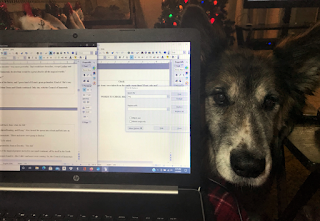
I suppose Beowulf wonders why I keep taking photos of him while I'm writing. It's because he DISTRACTS ME.

Okay, so I had an outline for We Love Trouble, but it was too long to serve as a typical synopsis. After months of writing, revising, editing, and polishing the manuscript, I had to carve that outline down even more. I was exhausted. But the job wasn't over, so I by-gosh carved out that synopsis, finishing when it was so late even the dog was asleep.

The next day, confident I had everything ready, I started submitting.

Now, most literary agents accept simultaneous submissions. That is to say, they don't mind if you submit to more than one at a time. Most publishers have a problem with that: They want to be the only publisher that can see your manuscript for several months before they send you a form rejection letter. That becomes an incredibly stressful waiting game for writers.

Just the same, a good author-agent relationship is vital, so I carefully select which agents I'm going to query. The synopsis stays the same, of course. Imagine writing a new synopsis every time! Since I do the extra research, over the course of two weeks I only submitted to fourteen agents. They were ones I thought would make for a good fit.

Then I went on to other things: Writing, editing, submitting short stories, occasionally sleeping. Replies began to trickle in, all but one of them form rejections. It appeared that my careful targeting impressed no one.

A couple of months later I got time to send more submissions. I skimmed over my materials, just to make sure I didn't want to change anything. That's when I discovered I had whittled my outline down to a synopsis ...

But I didn't check that synopsis for errors.


"Oh, that? It's the dumpster fire that used to be my writing career. Move along."

I sent it on rife with typos, misplaced words, and ... well, no spelling errors, but otherwise it was a trian wrack. Just like that, my two weeks of submitting was cleared away like a tornado sucking up a trailer park. If those agents remember me at all, it will be with the kind of dislike people reserve for drivers who cut them off in traffic. No one's perfect, but this wasn't one error: This was as if FDR started off his famous Pearl Harbor speech by getting the date wrong.

"December 6th, 1942 ... a date that will ... no, wait ...."

Since corrected, of course, but that doesn't get those agents back on my possibilities list. E-mail addresses can be whitelisted to allow them through--mine has been blacklisted. I can only hope they aren't swapping stories about me at agent conventions.

Learn from my fate. Edit. Polish. But for crying out loud, if you have to revise, go back and polish again. Some people will tell you too much time can be spent on editing, but I'm living proof that the opposite is also true.

Ah, well ... I'm sure I'll laugh about this someday.

No. No, I won't.

As part of submitting to agents and publishers, an author often has to write a brief synopsis of their novel. It's no big deal: Just boil your 80,000 word work of art into a 500 word ...

Okay, it is a big deal.

The actual length of a synopsis depends on who's asking, which is why I usually do three: a long one that's basically an outline, a medium length one of 2-3 pages, and a short one of 500-1,000 words. None are easy, if you're a long form writer.

These days, most agents and publishers ask for a page or less. You leave out subplots and a lot of the drama--it's can be a little dry, unlike most of your writing output, with just the facts and a brief look at your characters.

My finished rough draft was 4,085 words, in 12 pages.

The second draft is 2,985 words.

So. I have a bit of work to do.

After that I have to write a blurb, something you'd find on the back cover of a book, and it has to be good, interesting, and descriptive, and even shorter. Add to that a cover letter for your submission, which will be sent along with the first, oh, three pages of the manuscript, or five pages, or five chapters, or twenty pages, or whatever they ask for, and there's your submission package. Much of that you have to do even as a self-published author, for promotion purposes.

Writers stress hard over submission packages. But with the odds against them, and most never making enough sales to do it full time, you can hardly blame them.

Off to edit, then. Or submit, or research agents, or ... now that I think on it, it's February. Maybe I'll just have some fun and start on another story. I'll worry about outlining the new one when the days are longer.

This is why writers get a reputation for drinking.

(Let's see who reads to the end of this: After a rough couple of hours, I got it down to 839 words! Still over two pages, but what the heck. I know what you're thinking: "Now, Mark, wasn't that easy?"

No. No, it was not.)


 The final draft of The Source Emerald is done!

Wait, let me start over:

The "final draft" of The Source Emerald is done! (Assuming that will continue to be the title.)

There, more accurate. The Source Emerald is about a young FBI agent who is assigned to track down possible gem smugglers, only to discover two of her suspects claim to be foreigners--specifically, from the Land of Oz, which they insist is a real place. And if they don't find the mysterious gems everyone seems to be after, it might be the end of both their worlds.

I suppose it can be considered urban fantasy--I wasn't thinking in terms of genre when I wrote it. You might remember that my word count changed from draft to draft, starting at 67,515, peaking at 70,294 with the second draft, then dropping to 69,028. Now, after polishing and going through the whole thing line by line to check for voice and errors, I'm left with 69,370 words. I added some here and there for clarity, but also cut a lot out of one of the later chapters.

So, from the first word typed on November 1st to the "final" version, it took me just under three months to finish an almost 70,000 word novel. Yay, me! (I did do some outlining and research in October.)

Now Emily gets it.

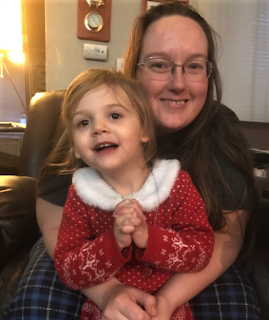
Emily was holding my granddaughter hostage until I finished my draft!! Hey, I don't make stuff up.
 

My wife/editor/IT department/cover artist doesn't take any crap from me. The manuscript will come back full of red words, with numerous notes in the margins. She'll tell me what does and doesn't make sense, what word choice is wrong, where I'm being long winded, and what food is best for me. Well, that last one isn't directly connected.

Then I'll go through the whole thing all over again, because writing is editing. When it's finally, completely, for sure done, I'll put it in a file and go over to reread We Love Trouble, the book I went through all this with last year. When The Source Emerald has sufficiently cooled, I'll try to read it for entertainment, like a regular reader, and we'll see.

This is the writing process. The process is boring to everyone but the writer, and sometimes even to them. But it's the best way I know to get a good product.


Also, I can't write without the dog keeping a close eye on me. I think he's spying for Emily.


So, the first draft of The Source Emerald weighed in at 67,515. The second draft topped out at 70,294. Now I've finished the third draft, and the new word count? 69,028. An increase of 2,779 words, followed by a decrease of 1,266 words.

But not the same words.

My third draft was a seek and destroy mission against certain words that can weaken your writing. Words that can make your writing too passive, such as "was". Adverbs. Words ending with "ing" that can become repetitive. Unnecessary words: For instance, instead of "stood up", why not just "stood"? Take up out, and make it stand down.

The word "suddenly" makes an action less sudden. Don't have too many "has". Don't tell the reader a character "felt" something ... show them feeling it.

Unlike some writers, I don't believe you have to stamp out every single one of these words. Treat them as a spice: Put in too many, and the mix isn't right. Despite what Stephen King says, I do have adverbs in my writing ... just not too many of them.

And now? The fourth draft. Time to work on voice and characterization a little.


Don't forget to check out the new short story!
http://www.eastoftheweb.com/short-stories/UBooks/EverKnow1183.shtml


Remember, books are the best entertainment: You don't have to worry about whether the CGI will be any good.


I finally finished the Still Slightly Off the Mark manuscript!

By which I mean it's ready for Emily to review, find all the mistakes, and send it back to me for rewrites.

But that's the way we do things in the Hunter household. With these other writing projects we're working on, my final polishing of this was when I could get to it, usually during breaks. That's why there would be food on the pages, if there were pages. (Not to worry, I covered the keyboard.)

It clocks in at just under 60,000 words in nineteen chapters, and has about twenty illustrations, which is a fancy word meaning "pictures". An illustrated manuscript--it's like I dragged myself into the 21st Century, or something.

It looks like we'll be able to get it out before Christmas, despite the previously mentioned other projects we're working on. Until then the working full title is either:


Still Slightly Off the Mark

A Celebration of Silliness


or more likely


Still Slightly Off the Mark:

Why I Hate Cats, and Other Lies


What do you think? If neither of those work I was thinking of titling it Harry Potter and the Star Wars Avengers, but Emily thinks that might be just a wee bit misleading.

Well, I finished my first draft of the synopsis for Fire On Mist Creek.

3,642 words.

Now, opinions differ on how long a novel synopsis should be. (In my opinion, I should be rich enough to hire someone else to write my synopsis and not worry about how long a synopsis should be.) The general consensus in the writing community is that a synopsis should be kept strictly between two thousand words and, oh, fifty words long. But the shorter the better; just like opera, or congressional term limits, or that little guy from Game of Thrones.


"Did you just call me a LITTLE GUY?"


 So I have some cutting to do, and with an ax, not a scalpel. There's a certain irony in cutting a novel down to something you then have to cut down. Meanwhile, I've identified a possible publisher for the book, but according to their publishing guidelines my novel is four hundred words ... too long. (Which is not something I'm remotely worried about for the moment.)

Later I'll probably have to boil my synopsis down into a back page blurb. There'll be significant shrinkage.


This is so much easier than writing a synopsis.


I spent some time last week judging 4-H writing projects. As usual, I marveled at how good  the entries were ... many of them much better than I was at the same age. It's great to know there are still young writers and readers out there. It's also great to know my own childhood writing has disappeared.

Then I dove back into revising Fire On Mist Creek, which I wrote last fall and edited in early winter. Revision isn't all that much fun to me, so I made myself a promise: Once I get this manuscript done ... I can start work on another story. The most fun parts for me are brainstorming the story, writing the first draft, and those little edits later on, when the story's mostly done and I can relax a little. (Maybe I should have promised myself cake.)

Major revisions of the rough draft, on the other hand--pulling stuff out, moving it around, changing whole scenes and so on--not so much fun. It beats self-promotion, though.

You know what else it beats? Writing a synopsis. I hate writing synopsis ...um, synopsi ... um, synopsises. Unfortunately, for the purposes of an upcoming submission I've paused the revision, and gone over to finish the synopsis, first.

Still a better job than assembling axles at a factory, or working at a bee moth larvea farm. Trust me on that.


So, we paid a little money to promote The No-Campfire Girls on the Fussy Librarian newsletter, which resulted in a few sales. Then I doubled down by letting social media have it with both barrels. I sent out a newsletter, then put up two different posts on multiple social media platforms, including some I still have never heard of and others that don't exist yet.

(By the way, FaceBackTalk will be huge.)

I even tagged some celebrity former Girl Scouts with what amounted to begging. Up to this point, the total effort has produced zero results, in sales or reviews. (To my knowledge; sometimes these things move slowly, like my bathroom sink.)

So the next time your father says "you get what you pay for", stop snickering and pay attention.

I'm tempted to paraphrase Davy Crockett by saying social media can go to hell--I'm going to edit. But after Crockett said something like that, he went to Texas and died at the Alamo. I'm not sure I want to fight to the last adverb.

Besides, social media can be pretty cool, what with the family's baby pics and the backdraft simulators, so as long as you don't get addicted or expect too much from it, it's okay. Another besides: I was once followed on Twitter by the original Becky from "Roseanne", so I've already had my fifteen minutes of fame. (And after she followed me her Twitter account disappeared; coincidence?)

Besides X3, I've gotten a lot of moral support from friends and fellow writers online ... so here's a reward in the form of a short excerpt from The No-Campfire Girls. It's free. You get what you pay for.

-----------------------------------------------------------------------------------------------


            Cassidy stopped in her tracks. “Oh, no.”

            “What?”

            For a moment Cassidy listened to the voices, then she gripped Beth’s arm. “Whatever you hear from now on, just remember this: Only half of it is true.” She took a deep breath, then marched on toward the barn’s entrance.

            Director Harris stood inside, along with two wranglers—former Lookout Girls who now specialized in the camp’s horses. The wranglers looked greatly amused. Mrs. Harris did not.

            The object of their attention was an old man who stood with his arms crossed. His craggy face was brownish-red, his nose a great tomahawk-like hook, his eyes brown and clear. “Whatever might help should be tried, Director Harris. We accomplish nothing if we don’t try.” He wore jeans, work boots, and, despite the heat, a long sleeve red flannel shirt and cowboy hat. Even the horses stood still, fascinated by him.

            “Oh, my gosh.” Beth whispered to Cassidy, “He looks like a full blooded Indian!”

            “Half Cherokee. But he’s full of something.” Cassidy took another deep breath, then stepped into the barn.

            Cassidy knows this guy. Beth followed the other girl in. Well, it made sense: Unlike Beth, Cassidy lived around here, and the nearest city wasn’t all that big. Heather claimed the nearest mall called her name from three hours away.

            Mrs. Harris didn’t notice them at first, but the old man looked around. “Osiyo, Cassidy.” He sent her a mild smile. “Maybe you could explain to your director that I do an effective rain dance.”

            Cassidy drew back a little. “Hello to you, Running Creek. Beth Hamlin, this is Running Creek.”

            “Call me Simon. I don’t stand on ceremony.” He looked at Mrs. Harris again. “Although I do know how to conduct ceremonies.”

            A moment of silence followed. Everyone, Beth realized, looked at Cassidy.

            “Mrs. Harris, Running Creek—Simon—is trained and experienced with rain dances.”

            Mrs. Harris sighed. “That doesn’t mean—“

            “These things must be done right,” Simon told her. “Once, in 1997, I danced too long. It was a hundred year flood.”

            “I didn’t question your ability to do the dance, Simon. But you’re here to teach archery in place of having campfires—not to change the weather so we can have the campfires. I don’t think it’s proper to do what amounts to a religious ceremony in front of all these girls.”

            Beth didn’t see how a rain dance would be any worse than the Lookout Girl rain song they’d sung at breakfast, but something told her bringing that up would be a bad idea.

            Simon stared at the director for a long moment, then whipped off his hat to uncover a full head of pure white hair. “The politically correct police strike again.” He bowed to Mrs. Harris, nodded to the others, then walked out the door. The horses watched him until he disappeared, as if waiting for his next trick.

            The wranglers tittered a little, until Mrs. Harris threw them a glare and they went back to work. Then she turned her attention on Beth and Cassidy. “You know Running Creek—Simon?”

            “Yes, ma’am.”

            “He came well recommended, but I’ve never heard of him doing rain dances before. One has to wonder if he’s for real.”

            “He’s really half Cherokee,” Cassidy told her.

            “And what’s the other half?”

            “Irish.”

            Beth looked at Cassidy. How did she know so much about the old man?

            “Irish. I think the word we’re looking for here is blarney.” Apparently too rattled to ask the girls why they were there, Mrs. Harris walked out the door.

            After the director left, Beth cleared her throat. “Blarney?”

            “I think it kind of means … bull … droppings. I wonder if Mrs. Harris is half Irish, too.” Cassidy smiled. “They’ll continue to not get along.”


www.markrhunter.com

I finished the second draft of Fire On Mist Creek, and didn't have to make as many major changes as expected. This was surprising, considering it was a NaNoWriMo novel, and the first draft was completed in about thirty-five days. (But I had an extensive outline going in.)

I added about a thousand words, fleshed out a character who didn't exist in my original outline, added one new scene, and completely rewrote another scene. Also, I gave the dog a bigger part. You can never go wrong putting a Dalmatian in your book.


And now: another round of edits. It's time to seek out and destroy adverbs, gerunds, passive voice, and weasel words. Weasel words are okay, if the character saying them is a weasel.

Since my NaNoWriMo page (I'm on the website at https://nanowrimo.org, under Mark R Hunter) has a place to put a synopsis for my work in progress, I'm doing something I've never done before: writing a synopsis for my work in progress.

Like most authors, I hate writing a synopsis. You want me to boil my eighty thousand word novel down to a five hundred word description? Or worse, a two hundred word blurb? Sure. While I'm at it I'll design a working cold fusion generator and use a hammer without hurting myself. Come on.

But it is an author's job, once he finishes his work, to boil it down into an outline, a long synopsis, a short synopsis, a blurb ... all for the agent, editor, or for the self-published, back cover and publicity. But just as I wait as long as possible to do anything that's hard, I hold off on the synopsis for as long as possible. Now I was faced with doing one for a book I haven't even written yet, which might change along the way. But, ah well ... I love a challenge. Well, not so much as I used to.

The working title is Fire at Misty Creek, which I invented quite literally as I wrote it down. The title, and the synopsis, might change a little or a lot along the way:


Wandering ex-firefighter Reed Carter might be just what the little town of Mist Creek, Kentucky needs: Thanks to an economic downturn there’s a shortage of volunteers to man the local fire department, so the eclectic townspeople draft a reluctant Reed to help.

But to volunteer Alice Delaney, Reed is just another problem to worry about. Dedicated to preserving Mist Creek, the windowed Alice is trying to run her antique shop while serving as fire department captain, and the last thing she needs is the distraction of a handsome man renting her building’s empty apartment.

But when a series of fires threaten the town, Alice and Reed must work together to protect its future—and in the end, they may save each other in more ways than one.

ozma914: Haunted Noble County Indiana (Default)
( Nov. 21st, 2016 02:51 pm)

I'm up to my armpits in book edits (chafes a little, and sometime tickles), so I'm only doing drive-by social media. Oh and I also took time for an interview in an upcoming issue of the Fort Wayne entertainment magazine, Whatzup. But you'll be hearing more from me soon, because when I've got an upcoming author appearance I have to promote it. Put it on your calendar: December 10th, Noble Art Gallery in Albion.
 
Luckily, the holiday season is never busy.
 
That was my sarcastic voice ... which my editor says doesn't translate well onto the page.
ozma914: Haunted Noble County Indiana (Default)
( Sep. 30th, 2016 05:25 pm)
Writers have seasons. Often it’s the season of our discontent.
It’s revision and editing season for me—which is nowhere near as much fun as writing season, but more fun than submission season. Submission season is like living in International Falls, Minnesota during winter, only without the certainty that spring will someday arrive.
But it’s been productive, and kept me away from politics on the internet.
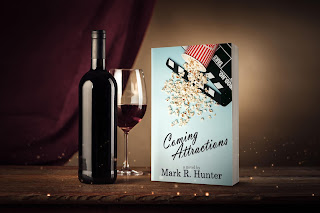
I made numerous revisions to Coming Attractions, most suggested by the editor who last rejected the manuscript, and it’s definitely better for it.  I did not make the major revision they suggested. That means I can’t resubmit to them, but I can still chalk it up as kind of a free editorial service. The glass is half full.
Meanwhile, I’d thought I was mostly done with Beowulf: In Harm’s Way, a science fiction story that may, or may not, be space opera. (There are violent disagreements over the definition.) I started out to just check the polished manuscript for mistakes, and discovered it wasn’t so very as polished, after all.
When a writer puts a manuscript away for a while and then comes back to it, all sorts of problems will pop up that were invisible in the heat of the moment. (Summer?) That was the case here, and I spent weeks revising. Now I need to polish and check for mistakes yet again, then give it to someone else who will, no doubt, find still more mistakes.
Then will come … submission season. However, that’s better than promotion season. Sometimes, during promotion season, I feel as if I’m standing in the middle of a quiet residential area in the middle of the night, screaming my lungs off. You want to attract interest, not annoyance.
Well, life is less bland when it’s seasoned.


I’m taking time off from my writing stuff to work on someone else’s writing stuff: specifically, I’ll be busy the next few days judging 4-H entries.


For those who don’t know, 4-H is an organization that gives hands-on learning experiences to young people. (That’s the way-short version!) I’d always thought of it as farm related—showing animals, and such. Turns out it’s way more than that, and a few years ago I was approached about helping with an area close to my heart, creative writing.


How good are the entries? In a few years, these kids will be helping me with my writing.


ozma914: mustache Firefly (mustache)
( Apr. 12th, 2016 08:11 pm)
Hoosier Hysterical was a 41,000 manuscript, and I added a thousand words while going through Emily's edits.

Now I've written 5,000 words worth of photo captions ... and I'm not done. So, at least no one can complain that it's too short.
ozma914: a photo heavy illustrated history, Arcadia Publishing (Images of America: Albion and Noble Coun)
( Apr. 11th, 2016 05:47 pm)

http://markrhunter.blogspot.com/2016/04/crunch-time.html


You won’t be hearing much from me for a while (you decide whether that’s good or bad). I’m working on captions for Hoosier Hysteria, for the same photos Emily is busy editing and inserting into the book.


I didn’t original plan to illustrate the book, but hey—people like pictures. And there will be a lot of them: I’ve already written 70 captions, with more to come. We still plan to publish in May, so what little I post in the next few weeks will mostly be about the project.

ozma914: mustache Firefly (mustache)
( Apr. 1st, 2016 03:03 pm)

I’m about a third of the way through Emily’s edits for Hoosier Hysterical. She’s a harsh taskmaster! And I can’t even complain to my wife about her.

But a good editor not only looks for typos: She points out what would make a manuscript better. That’s the time consuming part: where she finds things that don’t make sense, or could be done better. I’d rather my editor find that before the reader does.


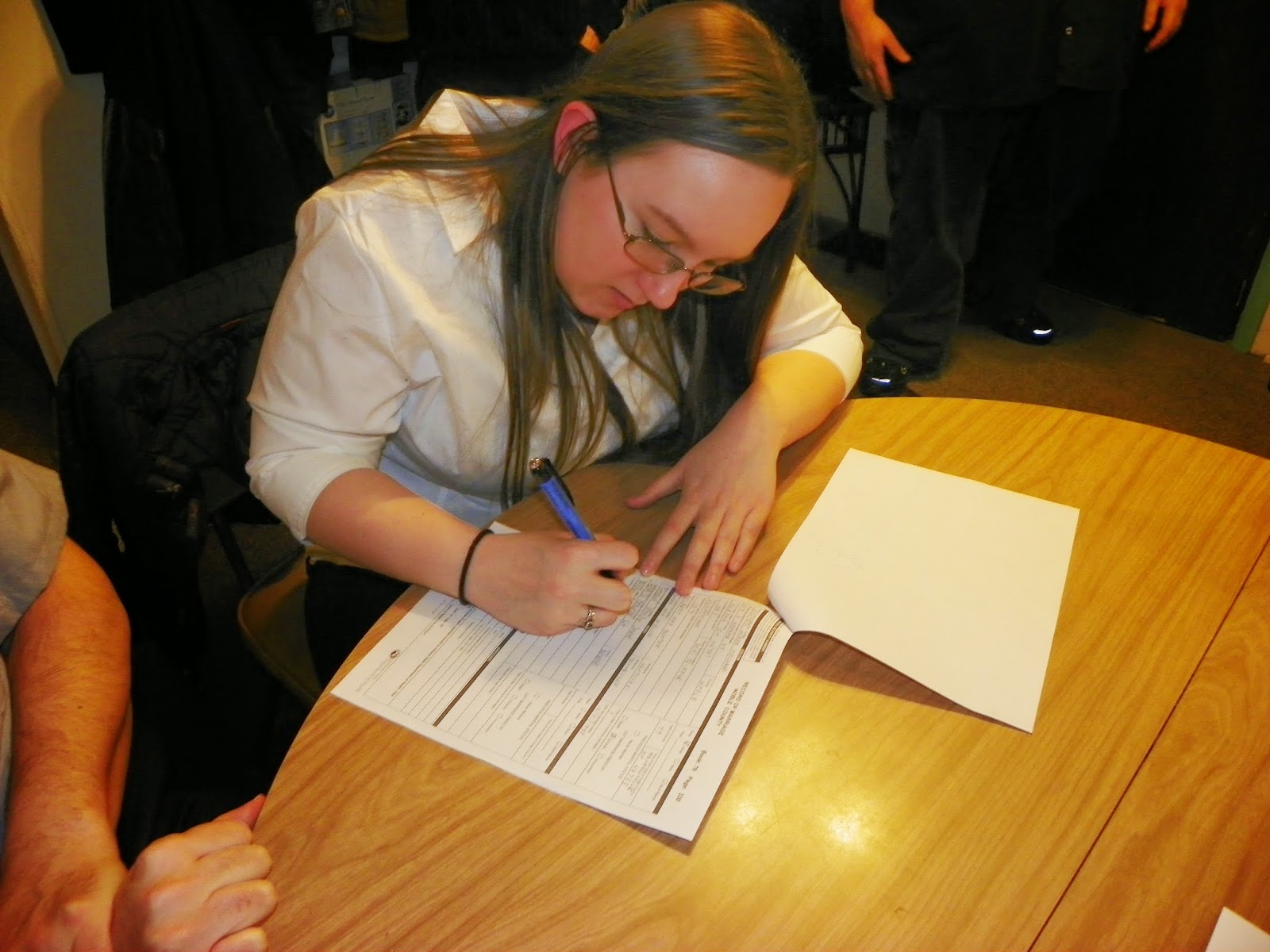
Emily edits our wedding license.


When you’re a writer, just being able to sit at the keyboard (or pen) may help save your sanity in these troubled times. (#WorstNovemberEver) So even though we’re halfway through National Novel Writing Month, I wanted to pass on Grammarly’s list of five writing mistakes to watch out for:


http://www.grammarly.com/blog/wp-content/uploads/2015/11/NaNoWriMo.jpg


Thanks to Grammarly for the tips:

https://www.grammarly.com/grammar-check


Since NaNoWriMo is something of a headlong rush, these tips might count more toward the next, and just as important, phase in your novel: editing. But editing the third draft of my latest book is exactly my task for this fall, and you should be halfway to finishing your first draft anyway, so it works!


Got a call today from the senior editor at Whiskey Creek Press, confirming some information as I work on check edits for The Notorious Ian Grant (The last step before galleys). Finalizing one book while still publicizing another is a sign of progress … right?

.

Syndicate

RSS Atom

Most Popular Tags

Powered by Dreamwidth Studios

Style Credit

Expand Cut Tags

No cut tags